
Summer Math Activities: 20 Ideas by Grade and Skill
Summer math activities that keep skills sharp without worksheets: 20 tutor-picked ideas, organized by skill, with a grade range for every one.
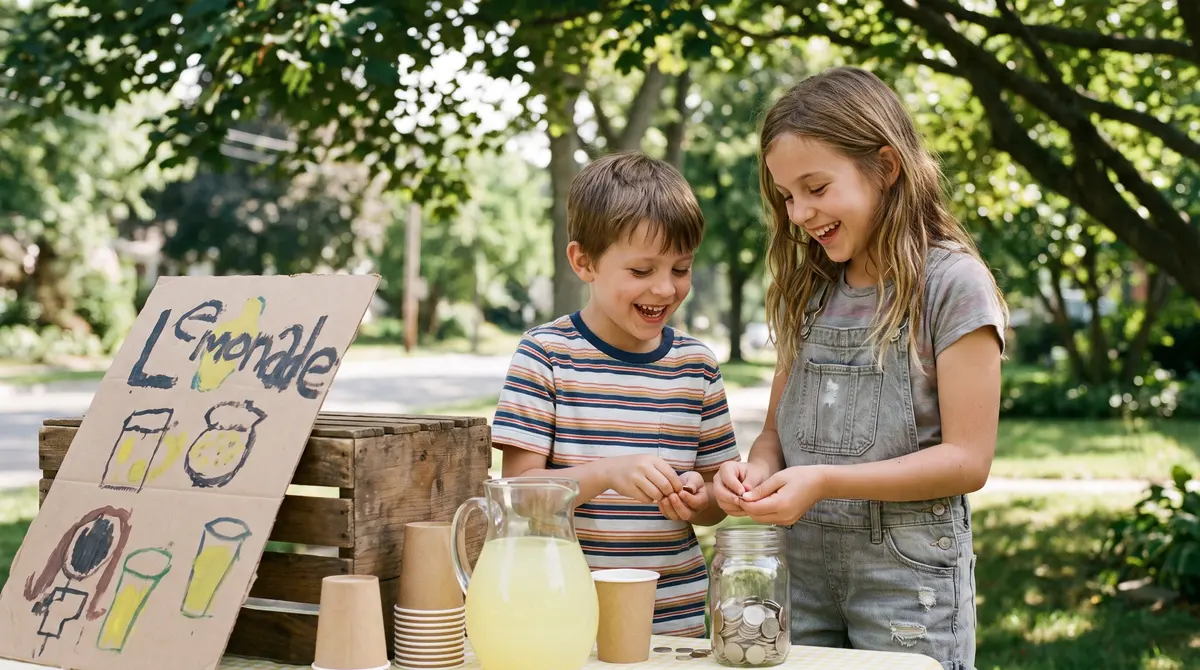
Math fades faster than reading over the summer, and the reason is simple: most families read together without thinking about it — bedtime stories, road signs, cereal boxes — but almost nobody sits down to "do math" for fun. The research bears that out: NWEA, tracking 3.4 million students across five summers, found the average student loses 25–34% of their school-year math gains over the break — against 17–28% in reading.
The fix is not a stack of worksheets that turns July into a battle. The 20 summer math activities below are the ones we actually recommend to families, and they are organized the way a tutor thinks about them: grouped by the skill each one builds, with a grade range on every single idea — so you can find something that fits your child in about ten seconds.
Why Summer Math Shouldn't Look Like School
A child who has just finished ten months of classroom math does not need an eleventh. What they need is to keep the machinery running — number facts staying quick, fractions staying familiar — so that September doesn't start with re-learning May.
That takes far less time than parents expect. Ten to fifteen minutes a day, most days, is genuinely enough. And it counts even when it doesn't look like studying — which is why the best summer math activities are built around things you were going to do anyway.
Mental Math on the Move
Car rides and errands are dead time — and the easiest summer math activities to start with, because they need no setup at all. These keep recall quick, which is the single thing that makes every other topic easier.
- License plate math. Add the digits on the car ahead. Then multiply them. Then do it faster than your sibling. Grades 2–5.
- Skip counting the road. Count by 2s, 5s, 10s — then by 3s, 4s, 6s once those are easy. Skip counting is the times tables in disguise. Grades 1–4.
- Beat the register. Estimate the grocery total before the cashier finishes scanning. Closest guess wins. Grades 3–6.
- Mile marker problems. "We're at mile 82, our exit is 140 — how much further?" Real subtraction with a real answer. Grades 3–6.
Kitchen Math (Fractions Without Tears)
The kitchen is the best fractions classroom there is, because the fractions are physical and the reward is edible. If fractions were shaky last year, start here — and see our guide to helping your child master fractions for the thinking behind it.
- Halve or double a recipe. Suddenly 3/4 cup times two matters, because dinner depends on it. Grades 3–6.
- The missing measuring cup. Hide the 3/4 cup. Now they need three 1/4 cups — equivalent fractions, discovered rather than told. Grades 4–6.
- Pizza and pancake fractions. Cut, compare, and argue about who got more. Halves, quarters, eighths become obvious. Grades 1–4.
- Cook backward from dinnertime. "We eat at 6:00 and this takes 90 minutes — when do we start?" Elapsed time, which trips up more kids than you'd think. Grades 3–6.
Money Math (Decimals, Percentages, and Motivation)
Money is the most motivating math there is, because the answer is something a child actually wants. It is also where decimals and percentages stop being abstract.
- Run a lemonade stand. Cost of supplies, price per cup, how many to break even, what's left over. This is a full business-math unit disguised as a summer afternoon. Grades 2–6.
- Hand over the budget. Give them $20 and the list. They track the running total and decide what to cut. Grades 3–6.
- The sale-price challenge. "It's $40 with 30% off — what do we pay?" Percentages with immediate stakes. Grades 5–8.
- Saving-goal chart. They want something that costs $60 and earn $8 a week. How many weeks? Division plus patience. Grades 2–5.
Outdoor and Measuring Math
Geometry and measurement are the easiest topics to take outside — these are the summer math activities most likely to feel like play rather than practice.
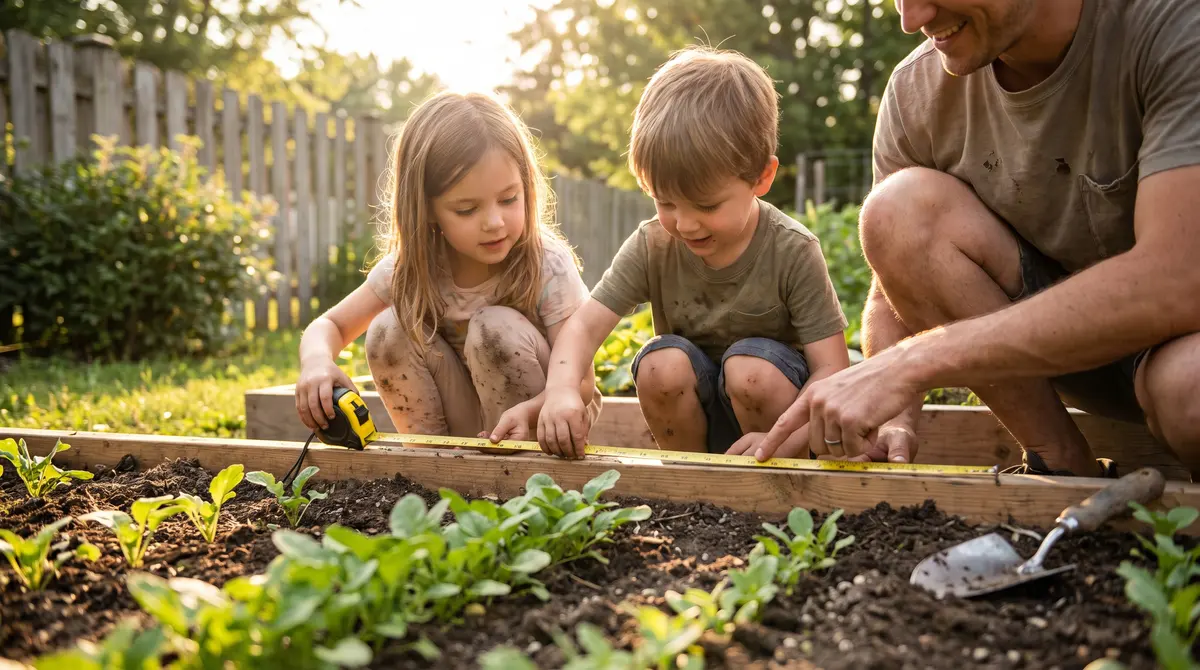
- Measure the yard. Length times width for a garden bed or a picnic blanket — area and perimeter with a tape measure. Grades 3–6.
- Estimate, then check. How many steps across the driveway? How tall is that tree? Guess first, measure second, discuss the gap. Estimation is an underrated skill. Grades 4–8.
- Sidewalk chalk number line. Draw 0 to 20 and call out problems they hop to. Movement plus math sticks better than either alone. Grades 1–3.
- Sports stats. Batting averages, race times, points per game — decimals kids will happily argue about. Grades 4–8.
Games That Are Secretly Math
Nobody has to be convinced to play a game, which makes these the least resisted summer math activities on the list. A rainy afternoon of Yahtzee is a genuine mental-math workout.
- Dice games. Yahtzee, Farkle, or plain "roll two and multiply." Addition, probability, and quick recall. Grades 2–6.
- Multiplication War. Each player flips a card, first to say the product keeps both. Brutally effective on times tables. Grades 3–6.
- Monopoly, Life, or any money game. Making change and counting rent is arithmetic nobody notices doing. Grades 3–8.
- Logic puzzles. Sudoku, KenKen, or a good riddle book. Not arithmetic — but the reasoning muscle every word problem uses. Grades 3–8.
How Much Is Actually Enough?
Little and often beats a long session on Sunday. A few guidelines that keep summer math activities sustainable:
- Ten to fifteen minutes a day is plenty for maintenance. You are preventing rust, not teaching next year's material.
- Stop while it is still fun. Ending on a good note is what makes them willing tomorrow.
- Let them be right out loud. Confidence is half of math, and summer is the low-stakes season to rebuild it.
- Don't grade anything. The moment it feels like school, the resistance starts.
Common Questions About Summer Math
Is it too late if summer is almost over?
No — and the last few weeks are arguably the most valuable. Skills come back faster than they disappear, so even two weeks of short, regular practice takes the rust off before the first day. A child who walks in able to recall facts quickly starts the year feeling capable, which shapes how they approach everything after.
What age should we start summer math practice?
As soon as school math starts mattering — around first grade. Before that, counting games and cooking already do the job without anything formal. The younger the child, the shorter the session: five minutes for a first-grader is a real workout, while a sixth-grader can handle fifteen.
Do math apps and workbooks actually work?
They work when they are the right level and someone is checking in. An app that adapts to your child, or a workbook a parent looks at twice a week, both help. What reliably fails is unsupervised practice at the wrong level — too easy and nothing sticks, too hard and they quietly give up. That is the advantage of the summer math activities above: you are in the room, so you notice immediately.
What if my child refuses to do any math?
Stop calling it math. Every activity on this list works without the word — a lemonade stand is a business, Yahtzee is a game, doubling a recipe is baking. Resistance is almost always to the format (worksheets, being tested, being corrected), not to the thinking itself. Take the format away and most kids will do the thinking happily.
When Games Aren't Enough
These summer math activities are maintenance — brilliant for keeping a child sharp, but they will not close a real gap. If your child finished the year genuinely behind — still counting on fingers for basic facts, or guessing at fractions — summer games will keep them where they are rather than move them forward.
Our grade-by-grade checklists are a quick way to find out which it is: 1st grade, 3rd grade, 4th grade, 5th grade, and 6th grade. And when the break ends, our five ways to set your child up for a strong year pick up where summer leaves off.
At Elkhawarizmy Academy, a handful of focused sessions over the summer is often all it takes to turn a gap into a fresh start — with no homework fights, because it is not competing with school. The first 1-on-1 lesson is completely free — book a trial and we will show you exactly where your child stands.
Try Your First Math Lesson Free
See how 1-on-1 online math tutoring can change everything for your child. No credit card required.
Book a Free TrialKeep Reading
8th Grade Algebra by State: Who Actually Gets to Take Algebra 1
8th grade algebra by state: about 1 in 4 US 8th graders takes Algebra 1, and 748,000 attend a school where none do. Look up your school district.
ReadBack-to-School Math: 5 Ways to Set Your Child Up for a Strong Year
Five things parents can do to beat the summer slide in math — plus the readiness checklist for your child's exact grade, from 1st through 6th.
Read