
Is Your Child Ready for 3rd Grade Math? A Back-to-School Checklist
The jump into 3rd grade math is bigger than most parents expect. Here's the back-to-school checklist of skills your child should have locked in before day one.
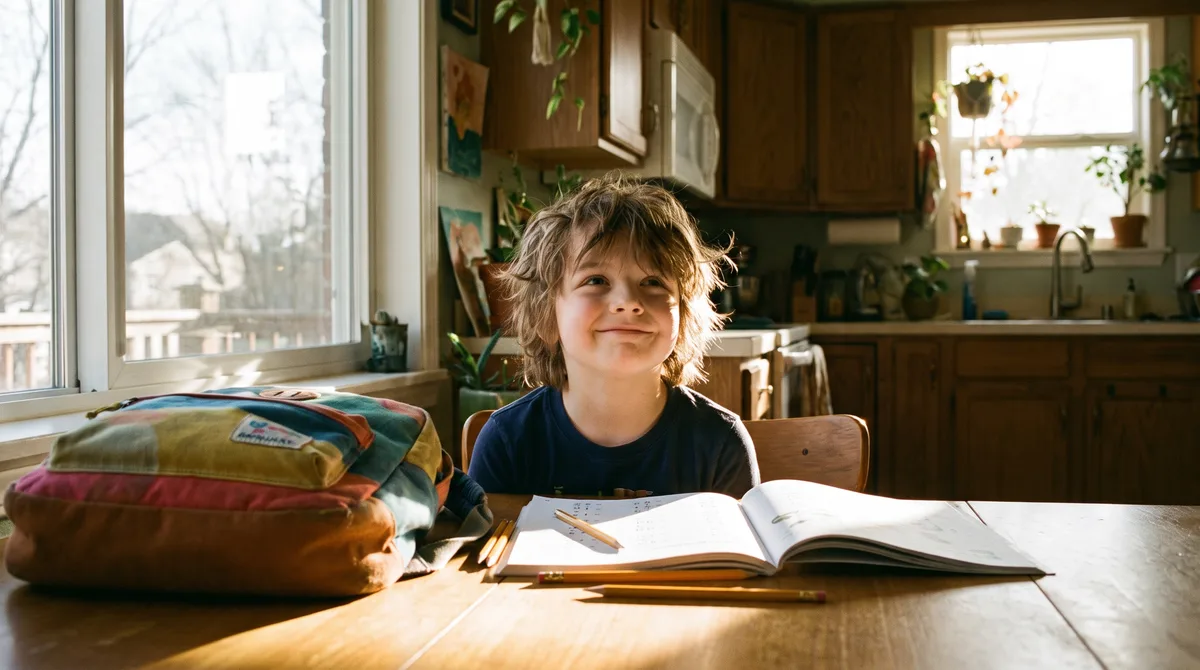
Second grade is mostly about counting and computing. Third grade is where math starts to feel like thinking. In a single year, your child goes from adding and subtracting to multiplying, dividing, working with fractions, and solving two-step word problems. It is one of the biggest leaps in all of elementary school — and children who arrive in September with a shaky foundation often spend the whole year playing catch-up.
Here is the reassuring part: readiness comes down to a handful of concrete skills, and you can shore up every one of them before the first bell. (It is worth the effort, too — Duncan and colleagues' landmark 2007 study in Developmental Psychology, pooling six long-term datasets covering more than 35,000 children, found early math skill to be the single strongest predictor of later academic success — ahead of both early reading and attention.) Use the checklist below to see exactly where your rising third-grader stands.
Why 3rd Grade Is a Turning Point
Up through second grade, math is largely about getting the right answer to a computation: 7 + 5, 40 − 20, count by tens. Third grade changes the job. Kids are now expected to reason: to understand what multiplication really means, to see a fraction as a number, to measure area, and to work through problems that take more than one step.
That shift only goes smoothly if the second-grade basics are automatic. When a child still counts on their fingers for 8 + 6 or hesitates on place value, every new third-grade concept lands on an unstable base. The goal before back-to-school is not to teach third-grade math early — it is to make the earlier skills so solid that there is room in your child's head for the new ideas.
The Back-to-School Readiness Checklist
Before the first day, your rising third-grader should be comfortable with these six skills. Each one takes about two minutes to check at the kitchen table.
1. Addition & Subtraction Within 100 — Fluently
Why it matters: Third grade layers multiplication and division on top of addition and subtraction. If the bottom layer is slow or shaky, everything above it wobbles.
Quick check: Can your child answer facts within 20 (like 9 + 7 or 15 − 8) in about three seconds, without counting fingers? Can they add and subtract two-digit numbers like 46 + 38 and 72 − 25? If either is a struggle, five minutes a day of fact practice before September pays off all year.
2. Place Value to 1,000
Why it matters: Third graders round numbers, compare them, and add and subtract within 1,000. None of that makes sense without a firm grip on hundreds, tens, and ones.
Quick check: Ask, "In the number 476, what does the 7 mean?" The answer you want is "7 tens, or 70" — not just "seven." If they say "seven," spend a little time with base-ten blocks or by writing numbers out as 400 + 70 + 6.
3. Skip Counting by 2s, 5s, and 10s
Why it matters: Skip counting is multiplication in disguise. Counting by fives is the five times table. A child who can already skip count has a head start the moment multiplication is introduced.
Quick check: Can they count by 2s to 20, by 5s to 50, and by 10s to 100, smoothly and without stalling? Practice it in the car — it is the easiest item on this list to build.
4. Equal Groups and Arrays
Why it matters: This is the concept that makes multiplicationmean something. Before "3 × 4 = 12" is a memorized fact, it should be a picture: three groups of four, or a grid with three rows and four columns.
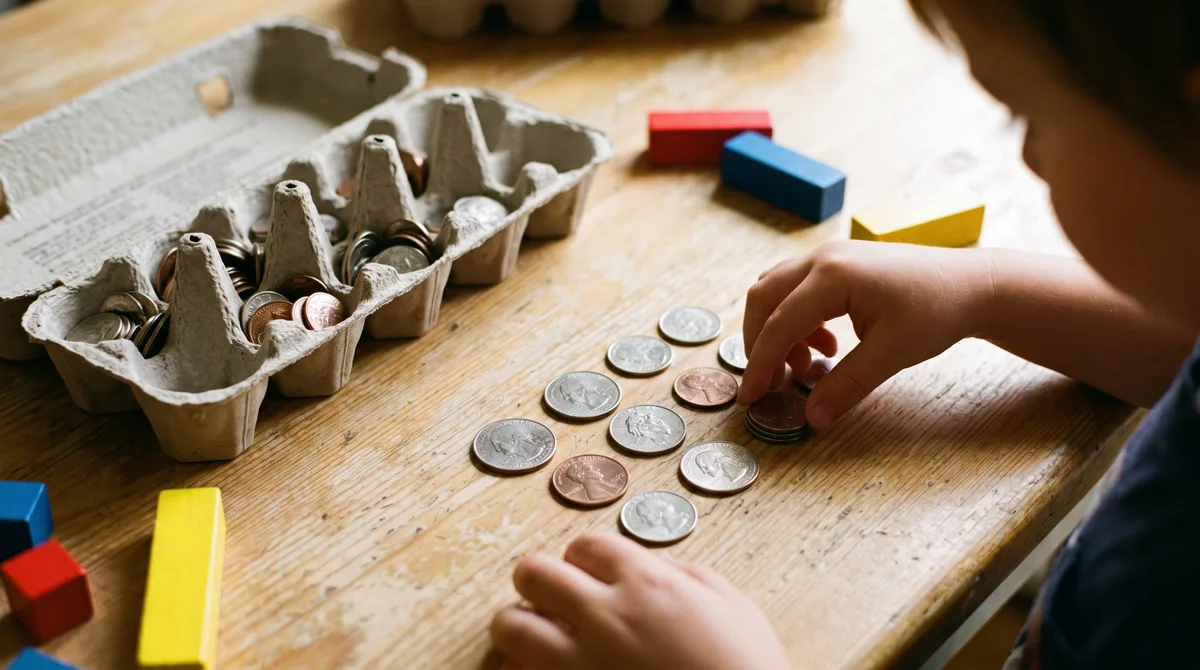
Quick check: Hand your child 12 coins and ask them to make "3 equal groups." Then ask them to arrange the same coins into "a rectangle with 3 rows." Kids who can do this walk into multiplication understanding what it is, not just chanting tables.
5. Telling Time and Counting Money
Why it matters: Third grade expects kids to tell time to the minute and solve word problems about elapsed time and money. These are also where math meets real life, which keeps it from feeling abstract.
Quick check: Can your child read an analog clock to the nearest five minutes? Can they count a small pile of coins? A kitchen clock and a jar of change are all the practice equipment you need.
6. Reading a One-Step Word Problem
Why it matters: Much of third-grade math is dressed up as stories. A child who can already pull the numbers and the question out of a simple math word problem is ready for the two-step versions coming their way.
Quick check: Try, "There are 8 stickers on each page and 3 pages. How many stickers?" You are not checking whether they know to multiply — you are checking whether they can find the numbers (8 and 3) and understand the question.
What Your Child Will Actually Learn in 3rd Grade
Knowing what is coming helps you see why the checklist matters. Over the year, your third-grader will work on:
- Multiplication and division within 100 — with the goal of knowing the facts through 10 × 10 from memory by year's end.
- Fractions as numbers — not just shaded pizza slices, but values that live on a number line. This is a notorious sticking point; we cover it in depth in how to help your child master fractions.
- Area and perimeter — measuring rectangles, and discovering that area connects right back to multiplication.
- Two-step word problems — problems that need two operations to solve, which demand real reading and planning.
- Two-dimensional shapes — sorting and describing quadrilaterals and their attributes.
Each of these feeds directly into fourth grade, where the pace picks up again. If you want a preview of the road ahead, see the common math struggles in 4th grade — many of them start as small, unaddressed gaps in third. When the time comes, the 4th grade readiness checklist tests exactly which of those gaps your child is carrying forward.
How to Prep This Summer (No Worksheets Required)
A little and often beats a marathon session. Ten focused minutes a day will do more than an hour every Sunday. And none of it has to look like school:
- Skip count in the car. By 2s, 5s, and 10s — then mix it up with 3s and 4s once those feel easy.
- Build arrays with what you have. Egg cartons, muffin tins, and coins turn "rows and columns" into a hands-on game.
- Cook together. Halving a recipe or measuring 3/4 of a cup is a painless first taste of fractions.
- Play with dice and cards. Any game that makes kids add or compare numbers quickly builds fact fluency without a single worksheet.
- Keep it warm, not tense. The aim is a confident child on day one, not a burned-out one. Stop while it is still fun.
Want a game plan that works across every grade, not just third? See our five ways to set your child up for a strong year in math. If you also have a younger child at home, the 1st grade math skills checklist covers the same ground two years earlier.
Signs Your Child Could Use a Head Start
Much of this rests on the year before it: if place value never quite settled, the checklist for second grade is the one to run first, because it checks the tens-and-ones idea that all of the above sits on.
If your rising third-grader still counts on their fingers for basic facts, gets fuzzy on place value, or freezes the moment a problem is wrapped in a story, a few focused sessions before school starts can turn a stressful September into a confident one. Catching a small gap now is far easier than closing a wide one in November.
At Elkhawarizmy Academy, our 3rd grade math tutors work with elementary students every day on exactly these foundational skills, and we tailor each lesson to where your child actually is. The first 1-on-1 online lesson is completely free — book a trial and we will show you precisely which checklist items are solid and which are worth a little summer attention before the new year begins.
Try Your First Math Lesson Free
See how 1-on-1 online math tutoring can change everything for your child. No credit card required.
Book a Free TrialKeep Reading
Is Your Child Ready for 2nd Grade Math? A Back-to-School Checklist
What your child needs before 2nd grade math — why tens and ones decide the year, plus six quick checks you can run at the kitchen table.
Read4th Grade Math: What Your Child Should Know Before Day One
The 4th grade math skills your child needs on day one — seven kitchen-table checks, the exact question to ask for each, and what each answer tells you.
Read