
Is Your Child Ready for 2nd Grade Math? A Back-to-School Checklist
What your child needs before 2nd grade math — why tens and ones decide the year, plus six quick checks you can run at the kitchen table.
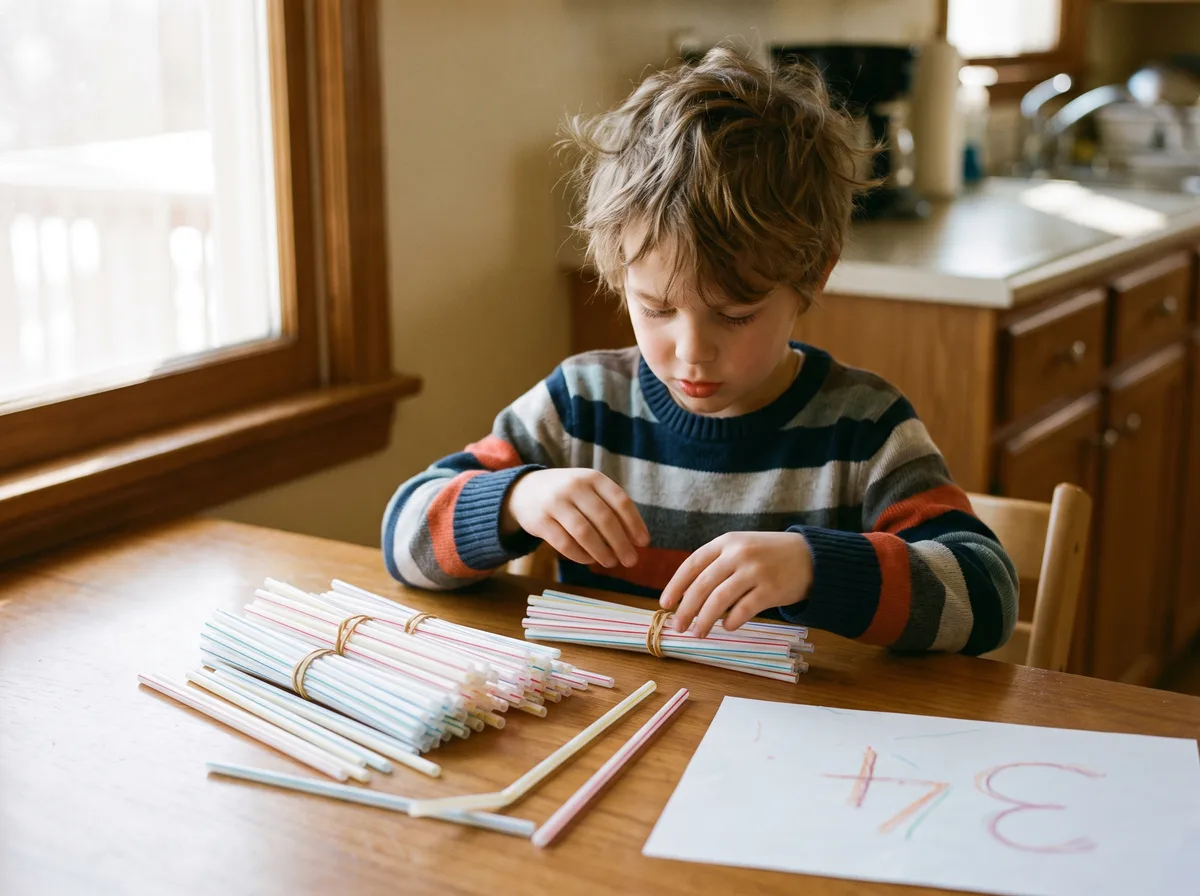
A first grader can get almost everything right by counting. Fingers, a number line, the dots on the page, one at a time — it is slow, but it works, and it produces correct answers all year. That is the thing to understand about 2nd grade math readiness: second grade is the year counting stops working, and the numbers get too big for the method long before anyone notices the method was the problem.
Most readiness lists will hand you fifteen or twenty items — count to 100, name the coins, tell time, sort shapes. They are not wrong, but they are flat, as though every line carried the same weight. One does not. And you can check it at the kitchen table in about five minutes.
The Year Counting Stops Working
Second grade is built on regrouping — what most of us were taught to call carrying and borrowing. And regrouping is where second grade breaks, for a reason that has almost nothing to do with the procedure itself.
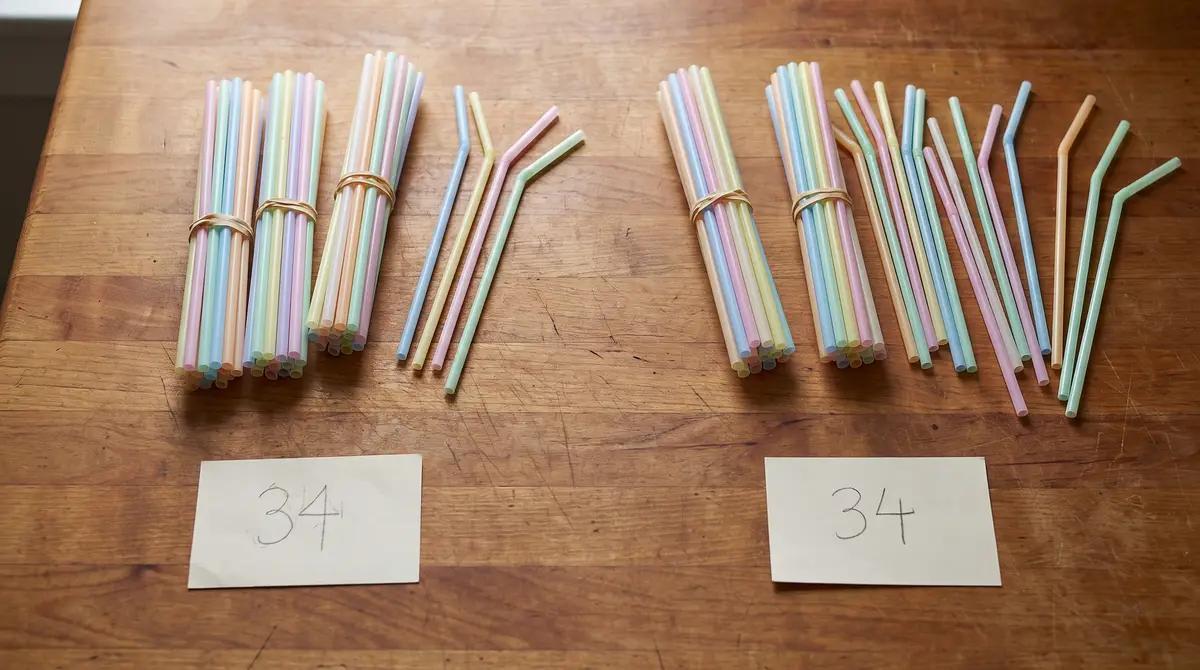
Ask a rising second grader what the 3 in 34 means. You will get one of two answers. Some children say “three tens,” or “thirty.” Others say “three” — because to them 34 is a 3 and a 4 sitting next to each other, the way cat is a c and an a and a t. Both children can usually count to 100. Only one of them is ready.
That distinction is not our invention; it is the end-of-first-grade expectation in its own right. The Common Core standard 1.NBT.B.2 asks that a child “understand that the two digits of a two-digit number represent amounts of tens and ones.” Not read them. Not count to them. Represent amounts.
Second grade then takes that and immediately stacks another floor on it. 2.NBT.A.1 extends the same idea to three digits, and spells out the part that catches children: “100 can be thought of as a bundle of ten tens — called a ‘hundred.’” A bundle of bundles. A child who never fully accepted that ten ones make one thing called a ten has nowhere to put that sentence.
This is why teaching the carrying procedure to a child who is not ready does not work, and why it fails in a specific, recognisable way: they can do it in September, with a worked example in front of them, and cannot do it in November. The steps were never attached to anything.
The Back-to-School Readiness Checklist
This is what a second grader should know in math on day one — six skills, listed in the order we would check them rather than the order a curriculum would teach them. The first two carry most of the weight. The last two will largely sort themselves out in class if the first four are solid.
1. Tens and Ones as Units, Not Digits
Why it matters: Every regrouping method second grade teaches assumes a ten is a thing you can pick up and trade. Without that, carrying the 1 is a rule about where to write a small number, and rules with no meaning behind them do not survive a holiday.
Quick check: Write 34. Ask what the 3 means and what the 4 means. “Three tens” and “four ones” is what you want. “Three and four” means start here, and start now — this one repays August more than anything else on the list.
2. Ten More and Ten Less, Without Counting
Why it matters: It is the fastest test of whether place value is real to a child. If tens are genuine units, ten more than 46 is an instant answer. If they are not, the child counts up ten times and arrives eventually.
Quick check: “What is ten more than 46? Ten less than 63?” You are listening for the pause, not the answer. Both children will say 56 and 53. Only one of them will say it straight away.
3. Addition and Subtraction Within 20, Without Fingers
Why it matters: Second grade's two-digit work asks a child to hold a running total, a regrouped ten, and a column position in their head at once. If the single-digit facts underneath are still being worked out each time, there is no attention left for the rest.
Quick check: Eight plus five. Thirteen minus six. Nine plus seven. Fingers under the table still count as fingers. This is the item second grade itself is still finishing — the standard 2.OA.B.2 asks children to “fluently add and subtract within 20” and, “by end of Grade 2, know from memory all sums of two one-digit numbers.” Arriving in August with it half-done is normal. Arriving with it untouched is not.
4. Adding a Two-Digit Number to a One-Digit Number
Why it matters: This is the first place a child meets a ten being made, and first grade is supposed to have introduced it. It is regrouping in miniature, with only one place to watch instead of three.
Quick check: “What is 27 plus 5?” A ready child gets to 30 and then adds 2, or knows 7 plus 5 is 12 and puts the ten where it belongs. A child who counts on five from 27 will get 32 and be right — note the method anyway, because it is the method that will not scale.
5. Writing a Number You Have Only Heard
Why it matters: It catches something the other checks miss. A child who writes forty-two as 402 is not being careless — they are writing what they hear, forty and then two, because the position of a digit is not yet doing any work for them.
Quick check: Say four numbers and have them written down, no repeating: sixteen, sixty, forty-two, ninety-one. Sixteen and sixty are the pair that separates children, and getting them the wrong way round at this age is extremely common and entirely fixable.
6. Finding the Missing Number
Why it matters: Second grade asks children to subtract by thinking forwards — to solve 42 − 38 by working out what gets you from 38 to 42 rather than by taking away. That move needs a child who can already sit comfortably with a gap in the middle of a sum.
Quick check: Write 7 + __ = 12, then 15 − __ = 9. A child who tries to add 7 and 12 has read the equals sign as “write the answer here,” which is worth catching now — it is the single most persistent misreading in elementary maths, and it goes on to make algebra harder six years later.
A Five-Minute Check at the Kitchen Table
Run it in one sitting, in this order, and stop if it stops being fun. You are gathering information, not administering a test, and a child who senses they are being examined will give you worse data, not better.
- Write 34. “What does the 3 mean? What does the 4 mean?”
- “Ten more than 46. Ten less than 63.”
- “Eight plus five. Thirteen minus six.” Watch the hands.
- “Twenty-seven plus five.” Ask how they got it.
- Write down: sixteen, sixty, forty-two, ninety-one.
- 7 + __ = 12. Then 15 − __ = 9.
Four or more solid, with the first two among them, and your child is ready. Two or three, and August is long enough to close the gap at the kitchen table. Fewer than two — particularly if item one was a miss — and it is worth a conversation with someone before term rather than in November.
What Your Child Will Actually Learn in 2nd Grade
Second grade adds one hundred to the picture and then spends the year working inside it: adding and subtracting within 100 and then within 1,000, place value to the hundreds, money and time to the nearest five minutes, and — quietly, without ever using the word — the equal groups and arrays that become multiplication in third grade.
The full year, and the places it tends to come apart, are set out on our 2nd grade math tutoring page.
The Answer Is Right and the Method Is Wrong
This is the signal most parents miss, and it is the reason a readiness check is worth doing at all: in second grade, a correct answer tells you much less than how it was reached.
A child counting on from 27 to 32 gets full marks. So does the child who went to 30 and added 2. They look identical on paper and they are not remotely the same position — one has a method that stops working the moment the numbers reach three digits, and nothing in the marking will ever flag it. By the time the answers start coming out wrong, in the spring, the gap is a year old.
So when you run the check above, ask how at least twice. The answers are the cheap part.
How to Prep Before the Bell — No Worksheets Needed
All of this is fixable in a few minutes a day, and none of it needs a printout.
- Trade with real tens. Straws in bundles of ten with a rubber band, or coins. Build 34, then ask for 34 a different way — three bundles and four singles, or two bundles and fourteen singles. That trade is regrouping.
- Count by tens off the decade. Not 10, 20, 30 — start at 7. Seven, seventeen, twenty-seven. Then backwards. It takes ninety seconds in the car.
- Play the missing-number game. “I am thinking of a number. Add six to it and you get thirteen.” Swap roles; being the one who sets the puzzle is where the understanding shows.
- Put a number line to 100 on the fridge. Not to practise — to point at. “We are here. Where is ten more?”
For more of this across every age, see our summer math activities that don't look like school and five ways to set your child up for a strong year.
When It's Worth Getting Help
Most children will not need a tutor for any of this. But second grade is a cheap place to fix a place-value gap and an expensive one to leave, because everything after it assumes the bundling idea is settled. The same gap found in fourth grade is buried under long division and fractions, and has to be dug out from underneath them.
It is worth knowing what online math tutoring actually looks like at this age, because it is mostly not worksheets. A good 2nd grade math tutor spends the first session finding out which of the six items above are real and which are being produced by counting — the distinction a class of twenty-six cannot check child by child. After that the work is short, concrete and spoken aloud: trading bundles, saying what the 3 in 34 means, ten more and ten less, until a ten stops being a rule about where to write a small number and becomes something your child can picture.
We teach these foundations every day, one child at a time. You can see the year ahead on our 2nd grade math tutor page, or read the same checklist a year earlier for first grade and a year later for third grade. The first lesson is free: a teacher runs a proper version of the check above and tells you honestly which items are solid — including, quite often, that your child is fine and does not need us. Book a trial and find out before term starts.
Try Your First Math Lesson Free
See how 1-on-1 online math tutoring can change everything for your child. No credit card required.
Book a Free TrialKeep Reading
4th Grade Math: What Your Child Should Know Before Day One
The 4th grade math skills your child needs on day one — seven kitchen-table checks, the exact question to ask for each, and what each answer tells you.
ReadIs Your Child Ready for 1st Grade Math? A Back-to-School Checklist
What your child actually needs before 1st grade math — the two skills that predict the year, plus a five-minute check you can run at home.
Read